The people behind Podivm
Podivm measures how you speak and how you look when you speak. It is built by two people who have spent a lot of time being judged on exactly those two things, in rooms where the feedback arrived after the round and never said which sentence cost them the round.
Rishab Suresh
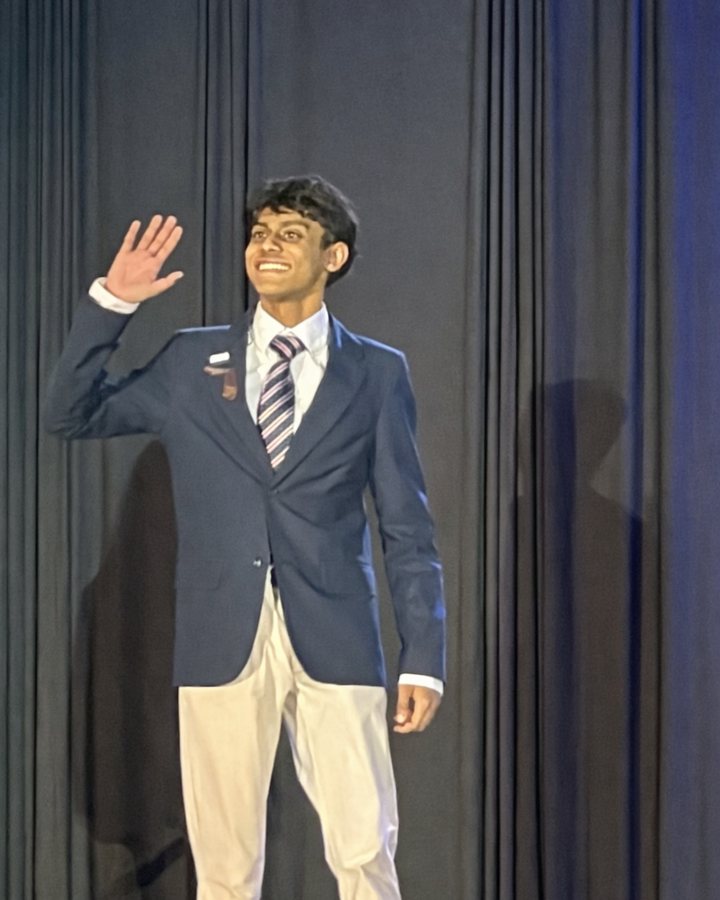
Duke University · co-founder
Electrical and computer engineering and computer science
Rishab is a three-time Best Delegate at various international Model UN conferences, including Princeton MUN and the North American Invitational MUN.
On Podivm he is one of the two people who built everything you can use here, and he is the one who keeps the measurement honest: a bar is a reading from a take or it is missing, and there is no third state where a number is filled in because it looks tidier.
Elsewhere: LinkedIn
Ekansh Rastogi
Duke University · co-founder
Economics, political science and entrepreneurship
Ekansh is a three-time Speech and Debate Nationals competitor in extemporaneous public speaking and a two-time regional champion.
On Podivm he is the other half of the build, and the one who keeps the coaching practical: the drills are written to be done standing up in a few minutes, and each one names the number it is trying to move rather than telling anybody to be more confident.
Elsewhere: LinkedIn
Why the report holds back
Both of us have had a judge tell us a number that turned out to be a feeling. That is the thing Podivm is built against. A bar in a report is either a reading from the take you just gave, or it says it is missing . There is no third state where it shows a zero because a zero looks tidier. The pace, filler and word counts come from a transcript the tab actually produced, the body language comes from a pose and face model reading frames the tab actually saw, and the score comes from a model trained on recordings rather than on opinions about recordings. When one of those fails, the report counts it in the missing list and names it, instead of averaging over it.
This is also why the app says "facing the camera" and not "eye contact". A webcam sees the direction of a head. It does not see a gaze, and a product that measured a head and called it a gaze would be doing the same thing as a judge with a feeling.
What to expect from Podivm
- A reading, not a verdict. Six bars, each measured from the take you just gave or reported as missing. The report names what it could not read instead of averaging over it, and a difference smaller than about five points is called about the same.
- The one change that helps most. Not a list of twelve things. The weakest bar gets a drill, the drill names the number it moves, and the next take says whether it moved.
- Your recording stays in the tab. The video and audio are read on your device and dropped when the page closes; what is saved is the numbers they produced. The privacy page says what does leave, and when.
- A free first cycle that is the whole loop. The quiz, the baseline, the plan it builds and one check-in, before any card is asked for. Pro opens the rest of the library.
- No borrowed authority. Neither of us is a clinician or a researcher, and this is not a validated assessment. It is a practice tool built by two people who have been judged on their speaking a great deal and wanted the feedback to be specific.
Reach us
Questions, a take that scored something strange, or a school that wants to use this with a team: team@trypodivm.app. The guides answer the speaking questions we get most, and the home page has the long version of what the app can and cannot measure.
Start with forty-five seconds
Tell the camera about yourself, and get the breakdown of how it landed. The first cycle is free, the take stays in the tab.
Try a take